Exploring Frequency Variations: The Intersection of Deck Makeup and Strategic Choices in Blackjack and Poker
Written by Zoe Sullivan · Jun 21, 2026

Exploring Frequency Variations: The Intersection of Deck Makeup and Strategic Choices in Blackjack and Poker
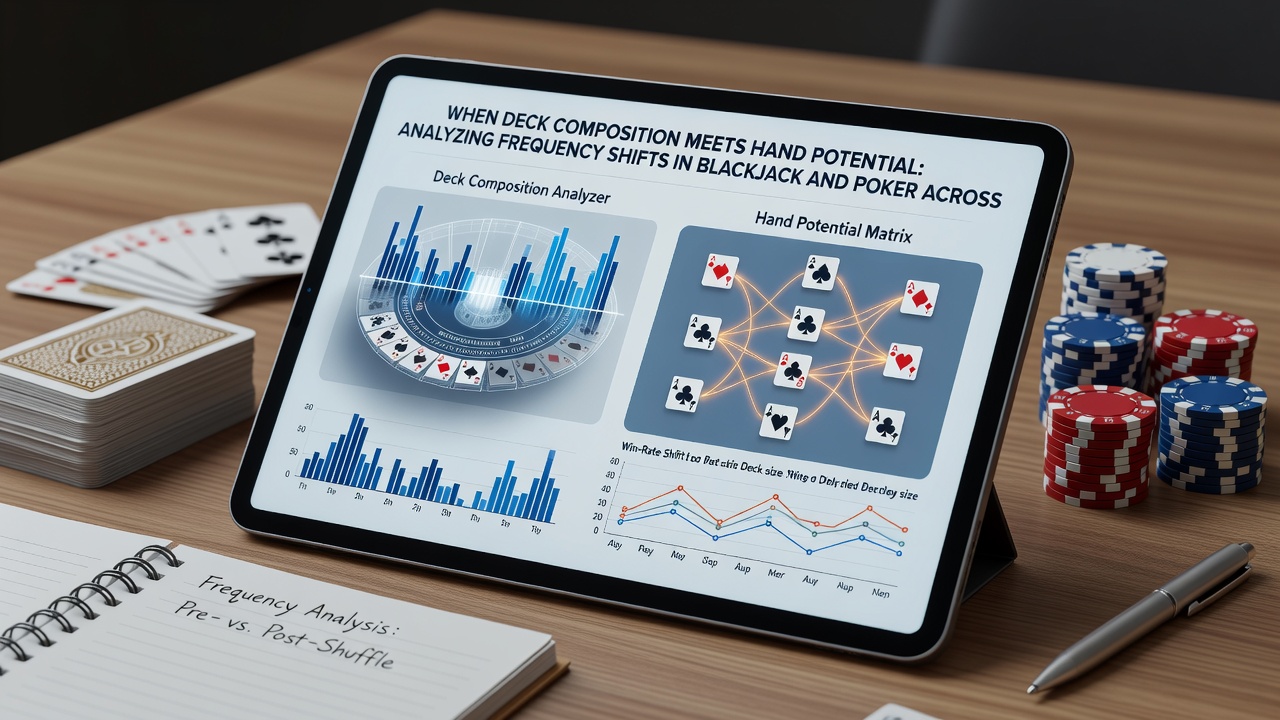
Deck composition directly shapes probability outcomes in both blackjack and poker because the removal of specific cards alters remaining frequencies throughout a shoe or session, and observers note these effects intensify when casinos adjust rules on deck counts, penetration depths, and dealing procedures. Researchers who track live play data have documented how six-deck shoes versus double-deck games produce measurable shifts in high-card availability, which in turn changes expected values for player decisions such as hitting, standing, or raising.
Casino regulations across jurisdictions further modify these dynamics because rules on reshuffle points, burn cards, and continuous shuffling machines determine how long certain card distributions persist before reset. According to figures from the Nevada Gaming Control Board, properties that mandate earlier reshuffles reduce the window during which players can exploit frequency imbalances, whereas venues permitting deeper penetration allow greater variance in hand potential calculations for both games.
Blackjack Frequency Patterns Under Different Deck Counts
Single-deck blackjack creates the most pronounced frequency swings because each card removal represents a larger percentage of the remaining deck, and data from controlled studies shows that ace and ten-rich segments appear more often when penetration exceeds 70 percent. Multi-deck formats dilute these effects, yet they still produce observable clusters when players track running counts through successive rounds. Those who have examined millions of simulated hands report that rules requiring the dealer to hit soft seventeen further tilt frequencies toward higher bust rates for players who chase strong totals late in the shoe.
Penetration rates also interact with deck size because shallower cuts limit exposure to depleted low-card segments while deeper cuts expose players to the full spectrum of remaining compositions. Industry reports compiled by the University of Nevada, Las Vegas gaming research group indicate that average blackjack tables in major markets reshuffle after 4.5 decks in a six-deck shoe, which constrains the magnitude of frequency shifts compared with venues that allow five-deck penetration.
Poker Community Card Dynamics and Shared Deck Effects
Poker introduces additional layers because community cards drawn from the same deck create overlapping frequency considerations across multiple players simultaneously, and analysts have measured how early street card removals affect later street hand strength distributions. In Texas hold'em, the appearance of suited connectors or paired boards early alters the probability matrix for remaining draws, an effect magnified in games using multiple decks to reduce variance. Seven-card stud variants add another dimension since each player receives unique upcards that deplete the shared pool at different rates.
Live dealer poker rooms often employ continuous shufflers or frequent deck changes that reset frequencies before significant depletion occurs, whereas traditional dealing procedures permit more gradual shifts. Research published by the Australian Institute of Criminology on casino operations notes that these procedural choices produce distinct patterns in hand evaluation accuracy across different regulatory environments, particularly when sessions extend past several hours without intervention.
Regulatory Changes and Their Influence on Frequency Exposure
Rulesets implemented in California cardrooms during 2025 created new constraints on blackjack-style games that indirectly affect poker frequency tracking because shared card pools now operate under tighter reshuffle mandates. Those adjustments, scheduled for full enforcement review in June 2026, are expected to standardize penetration limits across venues and thereby compress the range of observable frequency shifts. Similar measures proposed by the Malta Gaming Authority emphasize automated shuffling protocols that further stabilize deck composition throughout extended play periods.
Table minimum thresholds interact with these rules because higher limits often correlate with slower hand rates, giving frequency imbalances more time to develop before reshuffles intervene. Data compiled by the Canadian Gaming Association shows that properties enforcing elevated minimums experience fewer but more pronounced composition changes per session compared with lower-stakes environments where rapid dealing resets distributions quickly.
Integrated Decision Models Across Both Games
Deviation indexes developed for blackjack counting systems align with poker bluff frequency adjustments when analysts map card removal effects onto equity calculations, and several quantitative studies have demonstrated statistical overlap between these domains. Players who monitor ten-rich segments in blackjack often apply analogous logic to poker situations where remaining high cards influence both made-hand strength and draw potential. The convergence becomes evident in mixed-game formats where the same physical decks cycle between blackjack and poker tables within a single shift.
Software modeling used by regulatory testing labs confirms that rule variations such as surrender options or antes produce secondary frequency ripples that propagate through both game types. These models incorporate real-time deck tracking to forecast how specific card clusters affect expected outcomes, providing operators with data to calibrate house edges under evolving regulatory frameworks.
Conclusion
Frequency analysis across blackjack and poker reveals consistent patterns driven by deck composition, penetration depth, and regulatory parameters that shape hand potential in measurable ways. Observers continue to document how rule differences between jurisdictions produce distinct distributions, with data from multiple gaming authorities confirming that procedural choices directly influence the magnitude and duration of these shifts. As regulatory reviews approach in mid-2026, operators and researchers alike maintain detailed records of frequency behaviors to inform future adjustments.