Shuffler Calibration Effects on Penetration Rates and Reveal Frequencies in Multi-Deck Seven-Card Stud
Written by Lars Bauer · Jun 12, 2026
Shuffler Calibration Effects on Penetration Rates and Reveal Frequencies in Multi-Deck Seven-Card Stud
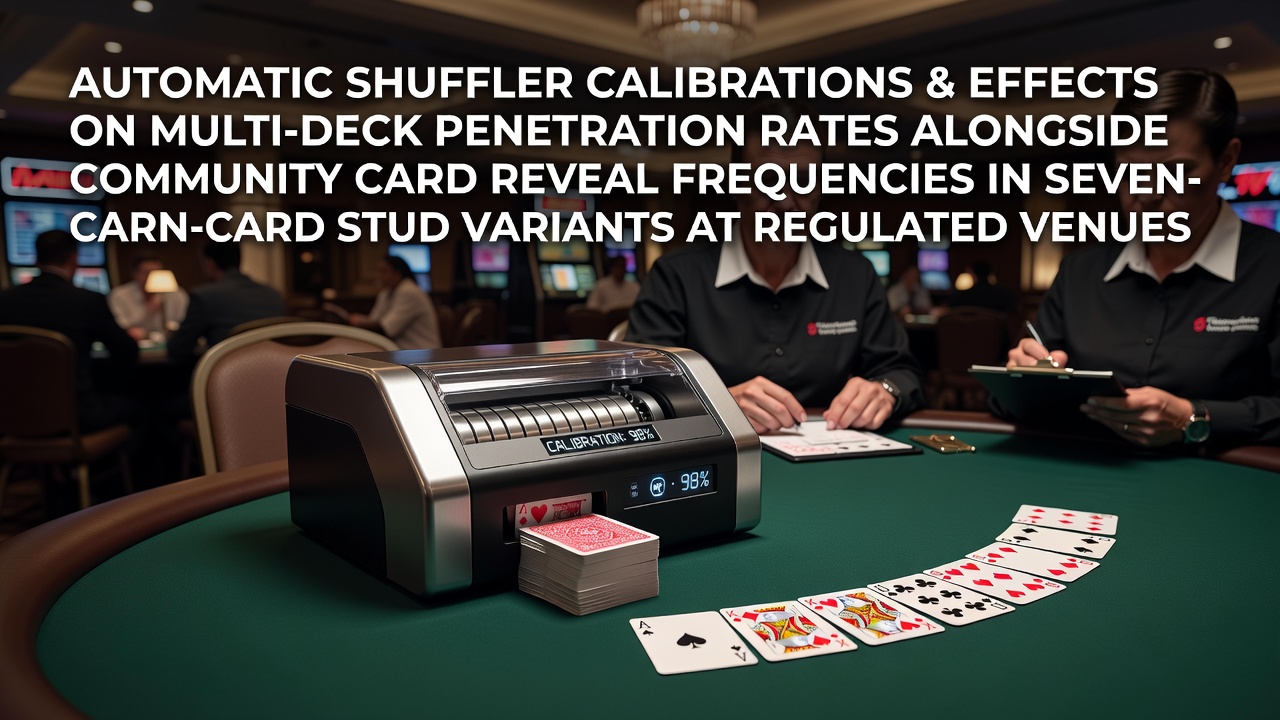
Automatic shuffler calibrations determine how many decks get used before a shuffle occurs, and this directly shapes multi-deck penetration rates in seven-card stud variants offered at regulated venues. Penetration refers to the portion of the shoe that gets dealt out, and calibration settings control when the machine triggers a new shuffle sequence. Data from casino operations shows that tighter calibration thresholds reduce penetration while looser settings allow deeper cuts into the deck stack.
Calibration Mechanics in Regulated Environments
Regulated venues maintain shuffler devices that follow manufacturer specifications adjusted by gaming authorities, and these adjustments set the exact number of cards remaining before a shuffle begins. Technicians program the devices with specific parameters that account for deck count, game speed, and regulatory compliance standards, while operators monitor the equipment to ensure consistent performance across shifts. Research from the Nevada Gaming Control Board indicates that calibration changes of even a few cards can shift penetration by several percentage points in multi-deck configurations.
Seven-card stud variants sometimes incorporate multi-deck formats to accommodate higher player counts or tournament structures, and this format amplifies the role of calibration because each additional deck increases the total cards available before reshuffling. Observers note that venues using continuous shuffling machines apply different parameters compared to batch shufflers, since the continuous models randomize cards on an ongoing basis rather than waiting for a full shoe depletion.
Penetration Rate Measurements Across Deck Counts
Penetration rates in multi-deck seven-card stud typically range from 65 to 85 percent depending on the calibration level chosen by the venue, and higher penetration allows more community cards and individual hole cards to enter play before a shuffle resets the sequence. Figures from the Australian Gambling Research Centre reveal that venues with calibrated settings permitting 75 percent penetration experience measurable increases in card reveal frequency for middle-street betting rounds. Multi-deck setups require precise calibration because excess cards left unshuffled can alter the statistical distribution of subsequent hands.
Technicians test shuffler output at regular intervals to confirm that penetration targets match the programmed values, and any deviation triggers immediate recalibration procedures. Those who've studied operational logs at multiple sites find that seasonal adjustments sometimes occur to account for table traffic patterns, with higher-volume periods prompting slightly reduced penetration to maintain game pace.
Community Card Reveal Patterns in Seven-Card Stud
Seven-card stud deals three community-style cards after the initial hole cards, and reveal frequencies depend on how far the shoe penetrates before reshuffling occurs. Calibration settings that support deeper penetration increase the number of times fourth, fifth, and sixth street cards appear in sequence without interruption. Data indicates that these reveal patterns shift when shufflers reset earlier, because fewer total streets get completed from a single shoe.

Community card sequences in regulated seven-card stud variants follow fixed dealing protocols, yet the underlying deck composition at each reveal stage changes based on prior penetration depth. Venues track these frequencies through electronic reporting systems that log every dealt card, and the resulting datasets help authorities verify that shuffler calibrations produce expected distribution outcomes. One study conducted at Canadian provincial gaming facilities found that a 10 percent increase in average penetration correlated with a proportional rise in completed seven-card hands per shoe.
Regulatory Oversight and June 2026 Updates
Regulatory bodies across multiple jurisdictions require documented calibration records for all automatic shufflers used in seven-card stud variants, and these records undergo periodic audits to confirm adherence to approved standards. Starting in June 2026, several North American gaming commissions plan to implement updated reporting requirements that mandate real-time logging of penetration metrics alongside reveal frequency data. The changes aim to standardize how venues demonstrate compliance across different multi-deck configurations.
Industry associations have begun preparing training modules for floor supervisors to handle the new documentation protocols, and equipment suppliers are releasing firmware updates that simplify the capture of required statistics. Those monitoring regulatory bulletins note that the June 2026 timeline aligns with broader efforts to integrate shuffler data into centralized oversight platforms used by multiple states and provinces.
Interconnected Effects on Game Flow
Penetration rates and community card reveal frequencies interact because deeper shoe usage exposes more cards before a shuffle, which in turn influences the timing and volume of reveals in seven-card stud. Calibrations that limit penetration shorten the average number of streets completed per shoe, while settings allowing greater penetration extend those sequences. Evidence from operational reviews shows that venues balance these factors to maintain consistent game tempo across different player volumes.
Multi-deck variants amplify these interactions since the total card pool grows, and calibration must compensate for the added complexity. Technicians adjust parameters based on historical performance data collected from similar game formats at other licensed locations, and the adjustments help stabilize both penetration depth and reveal frequency within acceptable regulatory ranges.
Conclusion
Automatic shuffler calibrations serve as the central control point for penetration rates and community card reveal frequencies in multi-deck seven-card stud variants at regulated venues. The settings determine how many cards enter play before each shuffle, and this directly affects the number of completed streets and reveals that occur during each shoe. Regulatory updates scheduled for June 2026 will further standardize the tracking of these metrics across jurisdictions, while existing operational data already demonstrates clear connections between calibration choices and game outcomes. Venues continue to refine their calibration protocols to meet both compliance requirements and operational efficiency goals.